
Inversion Tables vs. Other Decompression Tools: Which Works Better?
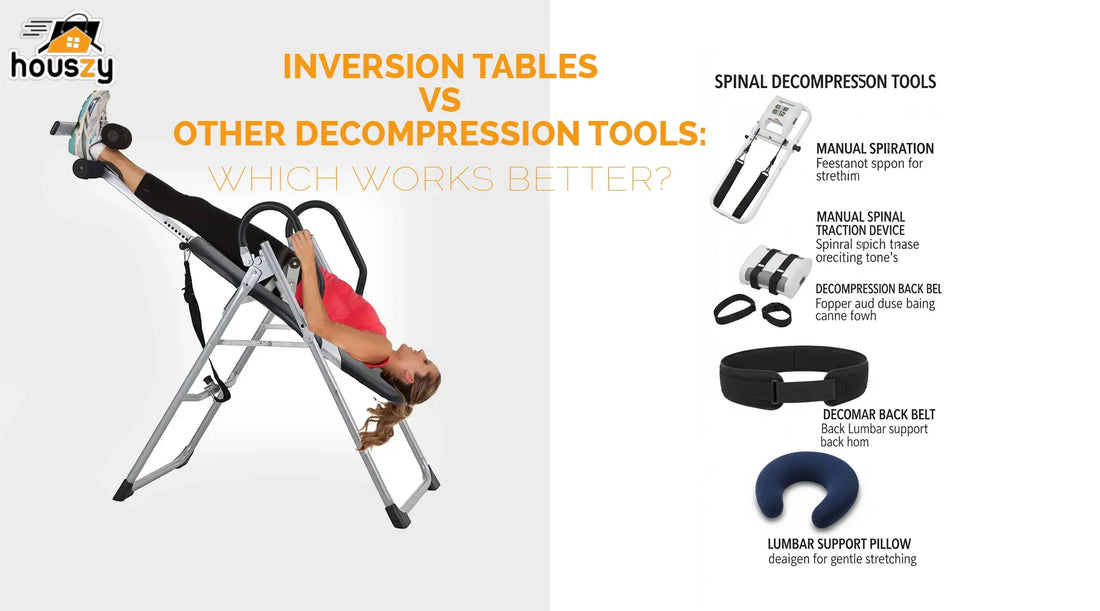
Back pain, poor posture, and nerve irritation are on the rise—fuelled by long hours at desks, repetitive work, and old injuries. Many people turn to decompression devices in search of relief, from foam rollers to back stretcher tables. While these can help in certain situations, their results are often short-lived.
The inversion table is different. By using gravity in a controlled, adjustable way, it decompresses the entire spine, not just one section. It offers safety, comfort, and repeatable results in the convenience of your home. In this article, you’ll see exactly how inversion tables work, the inversion therapy benefits they deliver, how they compare with other tools, and why they remain the most complete at-home decompression solution.
What an Inversion Table Does – And Why It’s Different
-
Uses gravity for full-length decompression
An inversion therapy table tilts your body to a chosen angle, letting gravity gently create space between vertebrae. This reduces joint pressure, relieves nerve compression, and supports disc hydration along the full spine. -
Adjustable angles for progressive comfort
An adjustable inversion table allows you to start at mild angles (20–30°) and gradually increase as you adapt. Even small changes produce noticeable relief, something fixed devices cannot replicate. -
Comfort-focused design for real use
Features like padded backrests and an inversion table with headrest ease neck and shoulder strain. Secure ankle supports and long side handles make getting in and out safe and simple, even for first-time users. -
Stable, safe build quality
A heavy-duty inversion table is made from rigid steel, with a wide base and reliable locking mechanisms. This stability inspires confidence, allowing you to relax into each session for better results. -
Practical for daily routines
Short, frequent sessions on a spine decompression table are more effective than occasional intense treatments. Inversion tables make it easy to keep that frequency without leaving home.
Inversion Therapy Benefits You Can Feel
-
Disc pressure relief
Gentle traction helps open discs slightly, easing load and encouraging nutrient flow. Many users notice fewer “pinching” sensations after consistent use. -
Support for sciatica relief
A disc bulge can press on the sciatic nerve, causing pain down the leg. An inversion table for sciatica relief can reduce compression, creating more space for nerve function. -
Posture correction
Long hours sitting can round the shoulders and tilt the pelvis forward. Inversion counters this by lengthening tight hip flexors, easing thoracic stiffness, and promoting a more neutral spine. -
Reduction in muscle tension
Hanging at an angle lets muscles in the back, hips, and legs release passively. This relaxation effect can be hard to achieve with active stretching. -
Better circulation and recovery
The inverted position increases blood flow to the spine and supporting muscles, aiding recovery after demanding days. -
Calmer nervous system
Controlled breathing while inverted signals the body to reduce stress responses. Many users feel more relaxed and mobile afterwards. -
Consistency over intensity
Two to five minutes a day often delivers better results than one long session a week. That’s why many consider a quality unit the best inversion table for back pain in a home setting.
How Other Decompression Tools Compare
-
Back stretcher table
-
Creates a fixed lumbar arch for light traction.
-
Targets only the lower back; no full-spine effect.
-
No adjustability, so improvement can plateau quickly.
-
Foam rollers and yoga wheels
-
Useful for muscle release and mobility work.
-
Do not create sustained spinal decompression.
-
Rely heavily on user technique, which can aggravate symptoms if done poorly.
-
Massage guns and handheld massagers
-
Relieve surface muscle tension.
-
No decompression effect; benefits are short-lived without addressing the root cause.
-
Gravity boots
-
Allow full inversion but require strong anchor points and advanced strength.
-
No back support; can be difficult and unsafe for beginners.
-
Clinic-based traction
-
Effective when done by trained professionals.
-
Requires regular appointments, travel, and cost, making consistency harder.
Note: Other tools may help with muscle tightness or temporary relief, but only the spine decompression table approach offers adjustable, full-length traction you can repeat daily at home.
When an Inversion Table Simply Makes More Sense
-
Recurring sciatica or nerve pain
If sitting or standing for long periods triggers symptoms, creating space for the nerve is crucial. Controlled inversion addresses the cause more directly than local tools. -
Posture problems from desk work
Rounded shoulders and forward-tilted hips respond well to gentle, full-spine traction. A short inversion session can reset your posture more effectively than stretching alone. -
Tried other tools with limited results
If foam rollers, heat packs, or a back stretcher table bring only brief relief, an inversion table offers the missing element—adjustable angles and complete spinal unloading. -
Busy schedules
Clinic visits are easy to skip when life gets hectic. Having a home spine decompression table removes travel and scheduling barriers. -
Multiple users in one household
Height and angle adjustments mean one device can help different people with different needs, making it a practical family investment.
Why a Heavy-Duty Inversion Table Leads at Home
-
Reliable stability
A heavy-duty inversion table stays firmly planted, letting you relax fully and focus on decompression. -
Progressive, safe angle changes
You can work up gradually, protecting sensitive backs while improving flexibility over time. -
Comfort that encourages consistency
Contoured padding, breathable materials, and an inversion table with a headrest help reduce pressure points, making it easier to use regularly. -
Cost-effective over the long term
One purchase delivers months or years of frequent, high-quality decompression without ongoing appointment costs.
Safety and Best Practice
-
Check suitability first
Seek medical advice if you have high blood pressure, glaucoma, heart conditions, recent surgery or are pregnant. -
Start gently
Begin at a mild angle for 1–2 minutes. Increase time and angle gradually as your body adapts. -
Use safety features every time
Secure ankle supports, confirm locking pins, and adjust the safety strap or belt before starting. -
Control your breathing
Slow, deep breaths help muscles release tension. If you find yourself bracing or clenching, reduce the angle. -
Keep a steady schedule
Aim for short, regular sessions—3 to 5 times per week. Pair inversion with a routine habit to make it stick. -
After each session
Return upright slowly, drink water, and move gently for a minute to maintain benefits.
Buy High-Quality Inversion Tables
Foam rollers, massage tools, and back stretcher tables have their uses, but none match the inversion table for adjustable, full-length spinal decompression at home. It combines stability, safety, comfort, and repeatable results, making it the most practical choice for long-term back care. Upgrade to a heavy-duty inversion table with smooth angle control, secure locking, padded support, and a comfortable headrest. Built for stability and daily use, it’s the simplest way to bring professional-level decompression into your home routine. Explore Houszy’s Inversion Table and start your personalised inversion therapy, your spine will feel the difference.


